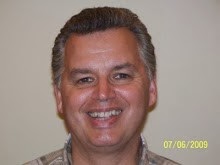
Terri and I are in Israel for a Holy Land tour sponsored by Campbell University divinity School. I'm going to blog about it when I can ...
Back in the 90's I officiated over the funeral of a man who died at age 93. He once told me that his family, in the 1920s, was the first in their area to own a car. He drove his mother from Wilmington, North Carolina to Lumberton, North Carolina--a trip that takes about an hour today. He said that it took them three days.
When we got on the plane for the second leg of our journey to Israel on Wednesday evening, I noticed that the small screen on the back of the seat in front of me was equipped with a GPS option for our flight. If memory serves, early in that flight, that device reported that we had something over 5,700 miles to go. I don't know how far it was from Raleigh to Philadelphia--the first leg of the journey from earlier in the day--but I know it was a lot more than the 300 miles needed to put the total miles of our trip over 6,000. The flight time of the two legs put together was about 11 1/2 hours.
I know air travel has been around for a long time, but the way this invention has made our world so much smaller in the space of just a few decades still amazes me.
The trip was smooth and uneventful. The folks that we are traveling with are wonderful. We arrived last night in time for a somewhat late supper, an orientation meeting, a devotional, and an opportunity to unpack before bed. The tour begins today.
Right now jet lag has me up early. Our hotel is on a beach on the Sea of Galilee. The sun is coming up and I'm going for a walk.
Thursday, May 16, 2013

Tuesday, April 16, 2013
Care about Boston; care about the world
Certainly everyone reading this knows about the horrific bombing in Boston on Monday that, as of this writing, left three dead and injured more than 100 others. This attack rightfully captures our attention and inspires our prayers and our concern. And there are some other things that happened in recent days that perhaps also broke our hearts.
Did you hear about the 16,000 children that died unnecessarily yesterday? They died of hunger related causes even though there is more than enough food in the world to feed everyone.
A bombing of a bus in Pakistan killed 8 people. A suicide bombing in Mogadishu, Somalia killed 29 people in a court complex. Nine children were among the 15 killed in a bombing of Aleppo, Syria. Ten people have been killed in recent days in clashes between Muslims and Christians in Nigeria. A boat carrying Afghan refugees sank killing 5, but 53 others are missing and feared dead.
Don't get me wrong; we should pay close attention to what happened in Boston. Our hearts should ache for the dead, for the injured, and for the hatred or sickness or whatever that led to this act of violence. We should pray for those who are grieving and those who are injured in the wake of this bombing.
I understand completely why an act of terror close to home grips us more than violence and tragedy elsewhere. My question is do we really care at all about killings and catastrophes in other places? Do we make any real effort to pay attention to the daily news of the senseless killing and regular tragedies in other countries? Does God's compassion stop with the borders of this country? Should ours?
Did you hear about the 16,000 children that died unnecessarily yesterday? They died of hunger related causes even though there is more than enough food in the world to feed everyone.
A bombing of a bus in Pakistan killed 8 people. A suicide bombing in Mogadishu, Somalia killed 29 people in a court complex. Nine children were among the 15 killed in a bombing of Aleppo, Syria. Ten people have been killed in recent days in clashes between Muslims and Christians in Nigeria. A boat carrying Afghan refugees sank killing 5, but 53 others are missing and feared dead.
Don't get me wrong; we should pay close attention to what happened in Boston. Our hearts should ache for the dead, for the injured, and for the hatred or sickness or whatever that led to this act of violence. We should pray for those who are grieving and those who are injured in the wake of this bombing.
I understand completely why an act of terror close to home grips us more than violence and tragedy elsewhere. My question is do we really care at all about killings and catastrophes in other places? Do we make any real effort to pay attention to the daily news of the senseless killing and regular tragedies in other countries? Does God's compassion stop with the borders of this country? Should ours?
Thursday, April 4, 2013
NC lawmakers seek to set up a state religion (part 2)
Yesterday I wrote about NC House Bill 494 that seeks to open the door to a state establishment of religion in this state. Using a feature from the earthly ministry of Jesus I showed that Jesus established a separateness between his mission and government. Now I would like to respond to some comments of the sponsors of the bill published in an article in the Raleigh News and Observer.
Carl Ford and Harry Warren, the Rowan County Representatives who filed the bill, say that they have no intention of setting up a state church. They want to support Rowan County Commissioners in a legal battle with the American Civil Liberties Union about the regular use of specifically Christian prayers to open their meetings. While the motivation behind the bill may be to allow such prayers the actual language of the legislation goes much further. The measure states that the First Amendment of the U.S. Constitution "does not prohibit states or their subsidiaries from making laws respecting an establishment of religion" and that North Carolina does not recognize federal court rulings that regulate or prohibit the state or any political entities within the state from "making laws respecting an establishment of religion."
So these two State Representatives and the eleven others who have signed on as sponsors may only wish to support Christian prayers at County Commissioner meetings, but the language of the bill clearly expresses support for a state establishment of religion.
However, the language of the legislation would have to go that far in order to accomplish the aim regarding Christian prayers at government meetings. The framers of the Bill of Rights clearly understood the Establishment Clause of the First Amendment to express strict separation of church and state.
One year after Congress approved the Bill of Rights, in the discussion concerning the census bill, James Madison explained why he did not include on the census a question concerning the occupations of citizens. He was concerned about listing religious professionals. Madison did not think it proper to list members of the clergy because “the general government is proscribed from interfering, in any manner whatever, in matters respecting religion; and it may be thought to do this, in ascertaining who [are] and who are not ministers of the gospel." No member of Congress disagreed with Madison's reasoning.
So the actual framers of the Bill of Rights believed its language to prevent the government from asking citizens what they do for a living because the question would have to be posed to ministers which was not allowed because the government was not to touch religion "in any manner whatever." This is obviously an expression of strict separation between church and state, and this is the interpretation of the Establishment Clause of the First Amendment by the the body that adopted it.
However, the sponsors of NC House Bill 494 say that the First Amendment does not apply to states. The problem with this thinking is that a series of Supreme Court rulings in the 1920s interprets a portion of the Fourteenth Amendment to mean that the First Amendment is enforceable against state governments. But the NC bill in question says that it does not recognize such court rulings. The problem with this thinking is that anyone with two grains of sense knows the the Supreme Court is the final arbiter of the law in this nation.
But what about the root cause of this lousy bill: prayer at County Commissioner meetings. Whatever you may think about that issue the solution proposed by the Rowan County Reps is way over the top. Yet, is public prayer at government meetings really a wise move?
Are Muslims allowed to lead prayers in Allah's name at County Commissioner meetings in Rowan County or any other county? Are members of any other religious faith other than Christians allowed to lead such prayers? What about those of no faith at all, how are they to participate in these prayers? I don't know the answers to these questions--I'm just asking.
The response of those who would support only Christian prayers in government meetings might be that the overwhelming majority of the citizens in their area claim to be Christians so it is appropriate that only Christian prayers be offered. The problem with this reasoning is that religious liberty is a fundamental right for all and if that right does not extend to everyone then everyone is not free. The driving force, really, behind the religion clauses of the First Amendment was oppression of religious minorities in this land.
Baptists in particular were severely persecuted as a religious minority in Virginia from about 1760 to 1780. In practicing their faith they were beaten, jailed, and fined by other Christians when church and state were united there. In response Baptists and others said that church and state should be separate in order that the government would not infringe on the rights of conscience of anyone, including those belonging to religious groups that were not in the majority and those claiming no religious faith at all.
Many would say that religious freedom is best preserved by keeping government out of religion entirely, including public prayer at government meetings. But Christians who want for this to remain a truly free country and who desire prayer in government meetings must make the practice free and fair for all faith groups and for those of no faith, including those in the minority. And I'm wondering how that can be accomplished in a manner that guards the fundamental right of religious liberty for all.
Carl Ford and Harry Warren, the Rowan County Representatives who filed the bill, say that they have no intention of setting up a state church. They want to support Rowan County Commissioners in a legal battle with the American Civil Liberties Union about the regular use of specifically Christian prayers to open their meetings. While the motivation behind the bill may be to allow such prayers the actual language of the legislation goes much further. The measure states that the First Amendment of the U.S. Constitution "does not prohibit states or their subsidiaries from making laws respecting an establishment of religion" and that North Carolina does not recognize federal court rulings that regulate or prohibit the state or any political entities within the state from "making laws respecting an establishment of religion."
So these two State Representatives and the eleven others who have signed on as sponsors may only wish to support Christian prayers at County Commissioner meetings, but the language of the bill clearly expresses support for a state establishment of religion.
However, the language of the legislation would have to go that far in order to accomplish the aim regarding Christian prayers at government meetings. The framers of the Bill of Rights clearly understood the Establishment Clause of the First Amendment to express strict separation of church and state.
One year after Congress approved the Bill of Rights, in the discussion concerning the census bill, James Madison explained why he did not include on the census a question concerning the occupations of citizens. He was concerned about listing religious professionals. Madison did not think it proper to list members of the clergy because “the general government is proscribed from interfering, in any manner whatever, in matters respecting religion; and it may be thought to do this, in ascertaining who [are] and who are not ministers of the gospel." No member of Congress disagreed with Madison's reasoning.
So the actual framers of the Bill of Rights believed its language to prevent the government from asking citizens what they do for a living because the question would have to be posed to ministers which was not allowed because the government was not to touch religion "in any manner whatever." This is obviously an expression of strict separation between church and state, and this is the interpretation of the Establishment Clause of the First Amendment by the the body that adopted it.
However, the sponsors of NC House Bill 494 say that the First Amendment does not apply to states. The problem with this thinking is that a series of Supreme Court rulings in the 1920s interprets a portion of the Fourteenth Amendment to mean that the First Amendment is enforceable against state governments. But the NC bill in question says that it does not recognize such court rulings. The problem with this thinking is that anyone with two grains of sense knows the the Supreme Court is the final arbiter of the law in this nation.
But what about the root cause of this lousy bill: prayer at County Commissioner meetings. Whatever you may think about that issue the solution proposed by the Rowan County Reps is way over the top. Yet, is public prayer at government meetings really a wise move?
Are Muslims allowed to lead prayers in Allah's name at County Commissioner meetings in Rowan County or any other county? Are members of any other religious faith other than Christians allowed to lead such prayers? What about those of no faith at all, how are they to participate in these prayers? I don't know the answers to these questions--I'm just asking.
The response of those who would support only Christian prayers in government meetings might be that the overwhelming majority of the citizens in their area claim to be Christians so it is appropriate that only Christian prayers be offered. The problem with this reasoning is that religious liberty is a fundamental right for all and if that right does not extend to everyone then everyone is not free. The driving force, really, behind the religion clauses of the First Amendment was oppression of religious minorities in this land.
Baptists in particular were severely persecuted as a religious minority in Virginia from about 1760 to 1780. In practicing their faith they were beaten, jailed, and fined by other Christians when church and state were united there. In response Baptists and others said that church and state should be separate in order that the government would not infringe on the rights of conscience of anyone, including those belonging to religious groups that were not in the majority and those claiming no religious faith at all.
Many would say that religious freedom is best preserved by keeping government out of religion entirely, including public prayer at government meetings. But Christians who want for this to remain a truly free country and who desire prayer in government meetings must make the practice free and fair for all faith groups and for those of no faith, including those in the minority. And I'm wondering how that can be accomplished in a manner that guards the fundamental right of religious liberty for all.
Wednesday, April 3, 2013
NC lawmakers seek to set up a state religion
My oldest daughter sent me a text message saying there is an effort underway in the North Carolina legislature to create a state establishment of religion in this state. She knows my passion for church-state separation so I figured this was the opening to some joke, but she assured me that she was serious. I poked around online and discovered that she is right.
According to one article, House Bill 494, filed by Rowan County Representatives Harry Warren and Carl Ford includes this language:
Eleven other House members have signed on as sponsors including Majority Leader Edgar Starnes. I have no idea what chance of passage this bill has, but I hope it's zilch. It is disturbing enough that at least 13 legislators of this state would support such an embarrassing, stupid, and appalling bill.
I've had trouble with the government of this state losing tax documents that my accountant mailed (fortunately using certified mail). If the government can't keep track of my tax documents, Lord knows I don't want the government messing around in my religion or that of anyone else.
There are so many angles from which to underscore the utter idiocy of this bill. It would be easy to start listing the long trail of blood left in history by state establishments of religion. But, for the moment, I'll stick to an application of one feature from the earthly ministry of Jesus.
The devil offered Jesus the power of the governments of the world to accomplish his mission and Jesus rejected the offer for what it was: a temptation of Satan. Thus Jesus established a pattern of separateness between his mission and government. He died not with the sword of government in his hand but with the spear of government in his side.
Would that the 13 lawmakers sponsoring this bill would apply this wisdom of Christ by keeping government and religion institutionally separate.
According to one article, House Bill 494, filed by Rowan County Representatives Harry Warren and Carl Ford includes this language:
"The North Carolina General Assembly asserts that the Constitution of the United States of America does not prohibit states or their subsidiaries from making laws respecting an establishment of religion ... The North Carolina General Assembly does not recognize federal court rulings which prohibit and otherwise regulate the State of North Carolina, its public schools or any political subdivisions of the State from making laws respecting an establishment of religion."
Eleven other House members have signed on as sponsors including Majority Leader Edgar Starnes. I have no idea what chance of passage this bill has, but I hope it's zilch. It is disturbing enough that at least 13 legislators of this state would support such an embarrassing, stupid, and appalling bill.
I've had trouble with the government of this state losing tax documents that my accountant mailed (fortunately using certified mail). If the government can't keep track of my tax documents, Lord knows I don't want the government messing around in my religion or that of anyone else.
There are so many angles from which to underscore the utter idiocy of this bill. It would be easy to start listing the long trail of blood left in history by state establishments of religion. But, for the moment, I'll stick to an application of one feature from the earthly ministry of Jesus.
The devil offered Jesus the power of the governments of the world to accomplish his mission and Jesus rejected the offer for what it was: a temptation of Satan. Thus Jesus established a pattern of separateness between his mission and government. He died not with the sword of government in his hand but with the spear of government in his side.
Would that the 13 lawmakers sponsoring this bill would apply this wisdom of Christ by keeping government and religion institutionally separate.
Tuesday, March 26, 2013
The good news looking good in the news
I got up early this morning as I normally do. As I was making a pot of coffee I turned on the TV and tuned into one of the national cable news channels. In the midst of the headlines this particular network chose to show a clip from last night's The Colbert Report, a comedic news show hosted by Stephen Colbert. The subject of the segment was Pope Francis' decision to hold a Mass in a prison on Thursday and to wash the feet of some of the inmates. In his satirical way, Colbert underscored the wisdom in Pope Francis' efforts to follow the example of Jesus by expressing love through lowly acts of service.
As the clip was replayed on a national news show this morning I was intrigued. I did a little Googling and found numerous mainstream media outlets proclaiming the Pope's plan to visit a prison and wash the feet of inmates including this one in the Washington Post. The article points out that "in the Gospel of John, Jesus washes the feet of his disciples just before his trial and crucifixion."
I'm a Baptist, not a Roman Catholic, but I must say that I am encouraged by such news accounts. It seems that Christianity regularly gets plenty of bad press. But today we have major news agencies reporting on a snippet of the good news of Jesus Christ and the attempt of one Christian leader to live out the Savior's love.
In the course of my Googling I also found a column in the left-leaning Huffington Post in which Allan Brawley, a self-proclaimed non-believer, delights in Pope Francis' example of living "in accordance with the teachings of Christ." Brawley expresses the hope that the new Pope will lead "all self-professed people of faith to re-examine what it means to live a truly Christian life on Earth." He finds the Pope's acts "refreshing ... even to a nonbeliever like me."
It's good to see the good news cast in a good light in seemingly unusual places. Followers of Christ should take note. Let us all give the world plenty of reason to see the good news as truly good.
As the clip was replayed on a national news show this morning I was intrigued. I did a little Googling and found numerous mainstream media outlets proclaiming the Pope's plan to visit a prison and wash the feet of inmates including this one in the Washington Post. The article points out that "in the Gospel of John, Jesus washes the feet of his disciples just before his trial and crucifixion."
I'm a Baptist, not a Roman Catholic, but I must say that I am encouraged by such news accounts. It seems that Christianity regularly gets plenty of bad press. But today we have major news agencies reporting on a snippet of the good news of Jesus Christ and the attempt of one Christian leader to live out the Savior's love.
In the course of my Googling I also found a column in the left-leaning Huffington Post in which Allan Brawley, a self-proclaimed non-believer, delights in Pope Francis' example of living "in accordance with the teachings of Christ." Brawley expresses the hope that the new Pope will lead "all self-professed people of faith to re-examine what it means to live a truly Christian life on Earth." He finds the Pope's acts "refreshing ... even to a nonbeliever like me."
It's good to see the good news cast in a good light in seemingly unusual places. Followers of Christ should take note. Let us all give the world plenty of reason to see the good news as truly good.
Wednesday, March 13, 2013
The number of young "nones" continues to skyrocket
There's a new poll out indicating that more and more Americans are parting ways with religion. Indeed, religious affiliation in the United States is now at its lowest point since it began to be tracked in the 1930s. But what struck me about the numbers in this latest survey is the alarming rate of increase in young adults who claim no religious preference. More than one-third of 18-24-year-olds now claim to have no religion.
Three years ago I saw an article about a Pew Research survey that said 20% of young adults claimed to be atheists, agnostics or had "no religion." I was appalled because the same article informed me that 'only' 11% of young Americans gave the same answers in 1988. I tried to go back and find that article of three years ago, but I couldn't locate it. I can't remember the exact age range of young adults in that Pew survey, but I did find that Pew released the results of another survey on October 9, 2012 indicating that 32% of 18-29-year-olds claimed no religion.
So, three years ago I was upset that that we went from 11% of young adults who had no religion to 20% in the span of 22 years. Now I learn that, in the last three years, that number has shot up to 32 or 33+ percent depending on whose survey I read. Isn't this truly alarming?
So I'm asking myself, "What are we going to do about this?" I certainly don't have all of the answers, but I am convinced that the solution, first and foremost, has to be about Christ-followers doing a better job of living and sharing the love of Christ. After all, Jesus said that the greatest commandment, the most important thing we do, is all about love (Mark 12:28-31).
Jesus' kind of love isn't a sappy, easy thing. His love gives everything, to the point of death, for those who don't deserve it. His love turns the other cheek rather than retaliating. His love forgives those who do us wrong no matter how many times they do us wrong.
This kind of love is hard. But it is attractive to everyone of every age when it is exemplified in daily living.
Three years ago I saw an article about a Pew Research survey that said 20% of young adults claimed to be atheists, agnostics or had "no religion." I was appalled because the same article informed me that 'only' 11% of young Americans gave the same answers in 1988. I tried to go back and find that article of three years ago, but I couldn't locate it. I can't remember the exact age range of young adults in that Pew survey, but I did find that Pew released the results of another survey on October 9, 2012 indicating that 32% of 18-29-year-olds claimed no religion.
So, three years ago I was upset that that we went from 11% of young adults who had no religion to 20% in the span of 22 years. Now I learn that, in the last three years, that number has shot up to 32 or 33+ percent depending on whose survey I read. Isn't this truly alarming?
So I'm asking myself, "What are we going to do about this?" I certainly don't have all of the answers, but I am convinced that the solution, first and foremost, has to be about Christ-followers doing a better job of living and sharing the love of Christ. After all, Jesus said that the greatest commandment, the most important thing we do, is all about love (Mark 12:28-31).
Jesus' kind of love isn't a sappy, easy thing. His love gives everything, to the point of death, for those who don't deserve it. His love turns the other cheek rather than retaliating. His love forgives those who do us wrong no matter how many times they do us wrong.
This kind of love is hard. But it is attractive to everyone of every age when it is exemplified in daily living.
Tuesday, March 5, 2013
A lesson from 500-year-old bones
The remains of Richard III, King of England from 1483 to 1485 have been found under a public parking lot. He died about 528 years ago in the Battle of Bosworth. DNA testing confirms that his body wound up under a dreary municipal parking lot.
So the body of a king was found in an unmarked grave where people parked their cars. That's not typically the way we picture the final resting place of a monarch, is it?
Of course, some might say that Richard III deserved an ignominious grave. His name is a virtual synonym for evil to many. Shakespeare certainly painted an unflattering picture of the king in one of his plays. But more recently some historians are saying that Richard's bad reputation may be rooted less in truth and more in an effort by his successor to tarnish his image. After all, in his brief reign, Richard implemented a few progressive reforms like the right of bail and the lifting of restrictions on books and printing presses.
But what intrigues me is the revelation of the final resting place of this king: under a bleak parking lot with no marker. For hundreds of years no one knew the location of the remains of King Richard III. If the grave of a king can end up paved over and forgotten, what of the legacy of those of us who do not hold such esteemed places in history.
Jesus advised us not to store up earthly treasures that always fade away. Rather he said that we should store up for ourselves treasures in heaven that never fade away (Matt. 6:19-21). In 1 Peter 1, followers of Christ are told that, thanks to the promise inherent in Jesus' resurrection, we have a living hope of an imperishable inheritance kept in heaven for us.
Maybe the news that King Richard III wound up in an unmarked grave under a parking lot should serve as a reminder that we should strive for a lasting legacy through ambition for something other than the typical trappings of prestige offered by our culture.
So the body of a king was found in an unmarked grave where people parked their cars. That's not typically the way we picture the final resting place of a monarch, is it?
Of course, some might say that Richard III deserved an ignominious grave. His name is a virtual synonym for evil to many. Shakespeare certainly painted an unflattering picture of the king in one of his plays. But more recently some historians are saying that Richard's bad reputation may be rooted less in truth and more in an effort by his successor to tarnish his image. After all, in his brief reign, Richard implemented a few progressive reforms like the right of bail and the lifting of restrictions on books and printing presses.
But what intrigues me is the revelation of the final resting place of this king: under a bleak parking lot with no marker. For hundreds of years no one knew the location of the remains of King Richard III. If the grave of a king can end up paved over and forgotten, what of the legacy of those of us who do not hold such esteemed places in history.
Jesus advised us not to store up earthly treasures that always fade away. Rather he said that we should store up for ourselves treasures in heaven that never fade away (Matt. 6:19-21). In 1 Peter 1, followers of Christ are told that, thanks to the promise inherent in Jesus' resurrection, we have a living hope of an imperishable inheritance kept in heaven for us.
Maybe the news that King Richard III wound up in an unmarked grave under a parking lot should serve as a reminder that we should strive for a lasting legacy through ambition for something other than the typical trappings of prestige offered by our culture.
Subscribe to:
Posts (Atom)