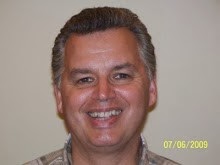
Hello, I am Santa Claus. I appreciate David giving me some blog space to communicate with you. My real name is Nicholas and I lived from A.D. 280-343 in the country now known as Turkey. I became a priest at a very young age and later I became a bishop. My parents were rich and, when they died, I became a very wealthy member of the clergy upon receiving my inheritance.
I gave away my fortune to the poor and needy. I tell you this reluctantly, because I am aware that Jesus said that we should help the needy secretly (Mat. 6:1-4). However, there is a character named after me in your culture whose story bears little resemblance to mine so I feel a bit of a need to set the record straight. Besides, I have been dead for more than 16 1/2 centuries, so what can it hurt to tell you now?
I took seriously Jesus' command in passages like Luke 12:33-34 where he told his followers to sell their possessions and give to the poor. Secretly I used my riches to assist the less fortunate in an effort to be obedient to this Christian calling. When my actions were later revealed, my story was told and re-told and some fantastic legends about me began to be circulated far and wide.
In the United States many of the popular tales about me appear to spring from some imaginative stories and a poem written about me in the early 1800's. I am known as a chubby guy in a red suit because of an artist's depiction of me in the U.S. in the 1800's. That image was picked up by other artists and it was made popular especially through Coca Cola ads that ran for many years beginning in the early 1900's.
I became connected with Christmas because I died on December 6. Many Christians from the Roman Catholic and Orthodox Christian traditions hold a feast in my honor on this date. In some areas the Feast of Saint Nicholas is held at the same time as the Feast of Christmas. So you can see how some traditions about me became mingled with Christmas.
I hear that many in this culture think this season is more about my coming than Jesus' coming. As a follower of Jesus I would much prefer that the Advent season be observed as the coming of Jesus rather than the coming of Santa Claus. However, if you are going to connect this season with me to your children or your grandchildren or yourself, then do me a favor and get my story right.
There are several children's books containing my real story that you can pick up and read to young people. There is a brief article about me that came out a few years ago in the Biblical Recorder that you can read here. I would really appreciate it if you might use such resources to recover the true story about me.
According to a traditional Christmas reading from the epistles, Jesus gave himself for us "to purify for himself a people zealous for good deeds" (Titus 2:14, NRSV). I hope my testimony of good deeds in some small way honors this purpose for which Jesus gave himself for us.
What about your Santa Claus traditions? Do they line up well with my real story? Are they true to the purpose for which Christ gave himself--to create a people zealous for good deeds? Do you sell your possessions and give to the poor as Jesus commanded?
Thursday, December 6, 2007

Saturday, December 1, 2007
Who is a scrooge?
Sometimes those called "scrooges" in our culture are not really like the Scrooge from Charles Dickens' classic story entitled "A Christmas Carol." Dickens described Ebenezer Scrooge as "tight-fisted" and the story emphasizes his steadfast refusal to help the poor. Scrooge was filthy rich and he was proud of the fact that he would not share the tiniest portion of his wealth with those in need.
According to dictionary.com a "scrooge" is "any miserly person," which is a definition in keeping with the conduct of Ebenezer Scrooge. However, the label "scrooge" in our culture often has an entirely different sense. At least it does in my personal experience.
I suppose I am a bit sensitive about this matter because, from time to time, I have been accused of being a scrooge at Christmas time. However, I have never been labelled in this way for being tight-fisted toward the poor. Rather, I have been called a scrooge for expressing dislike for a couple of the most popular features of a traditional Christmas in our society.
We celebrate the coming of Jesus who came to "proclaim good news to the poor" (Luke 4:18), and who said that we should see his face in the faces of the poor and needy and help them accordingly (Matthew 25:31-46). Jesus' birth is the ultimate in giving away everything to help those in need (2 Corinthians 8:9). Mary said that, in the coming of Jesus, God "filled the hungry with good things but . . . sent the rich away empty" (Luke 1:53, TNIV).
So it would make sense that we would mark the coming of one who gave everything to help the needy by making assistance of the needy the top priority, but we generally don't. Most of the Christmas time, energy and money in this society are devoted to buying gifts that will be soon forgotten for people who didn't need them in the first place. Our children tend to get more excited about the coming of a mythical character who I will not name instead of the coming of the King of kings and Lord of lords. We, with our main Christmas tradition, nurture consumerism rather than sacrifice for the needy.
From time to time, from the pulpit and at home, I have pointed out my dislike of our standard Christmas gift giving and receiving priorities. I have mentioned that I do not think it is good to encourage among our children the veneration of that mythical character. I make a point not to be a grump in so doing. Nonetheless I have been called a scrooge because I do not embrace our Christmas consumerism and the trickery associated with a certain Christmas myth.
It is true that Scrooge despised the standard Christmas traditions of his day and I don't care for some of our modern Christmas practices. Yet this is where the comparison stops as far as I can tell. It seems to me that those who embrace the Christmas consumerism of our culture share more of a kinship with Scrooge.
Scrooge withheld his money from the needy at Christmas time and, for the most part, we do too. Many will give a little to help the poor, but that figure tends to pale in comparison to the amount that most spend on unneeded gifts for those who are not poor. Such a lack of generosity toward the poor is pretty doggone Scrooge-like.
So who are the scrooges among us?
According to dictionary.com a "scrooge" is "any miserly person," which is a definition in keeping with the conduct of Ebenezer Scrooge. However, the label "scrooge" in our culture often has an entirely different sense. At least it does in my personal experience.
I suppose I am a bit sensitive about this matter because, from time to time, I have been accused of being a scrooge at Christmas time. However, I have never been labelled in this way for being tight-fisted toward the poor. Rather, I have been called a scrooge for expressing dislike for a couple of the most popular features of a traditional Christmas in our society.
We celebrate the coming of Jesus who came to "proclaim good news to the poor" (Luke 4:18), and who said that we should see his face in the faces of the poor and needy and help them accordingly (Matthew 25:31-46). Jesus' birth is the ultimate in giving away everything to help those in need (2 Corinthians 8:9). Mary said that, in the coming of Jesus, God "filled the hungry with good things but . . . sent the rich away empty" (Luke 1:53, TNIV).
So it would make sense that we would mark the coming of one who gave everything to help the needy by making assistance of the needy the top priority, but we generally don't. Most of the Christmas time, energy and money in this society are devoted to buying gifts that will be soon forgotten for people who didn't need them in the first place. Our children tend to get more excited about the coming of a mythical character who I will not name instead of the coming of the King of kings and Lord of lords. We, with our main Christmas tradition, nurture consumerism rather than sacrifice for the needy.
From time to time, from the pulpit and at home, I have pointed out my dislike of our standard Christmas gift giving and receiving priorities. I have mentioned that I do not think it is good to encourage among our children the veneration of that mythical character. I make a point not to be a grump in so doing. Nonetheless I have been called a scrooge because I do not embrace our Christmas consumerism and the trickery associated with a certain Christmas myth.
It is true that Scrooge despised the standard Christmas traditions of his day and I don't care for some of our modern Christmas practices. Yet this is where the comparison stops as far as I can tell. It seems to me that those who embrace the Christmas consumerism of our culture share more of a kinship with Scrooge.
Scrooge withheld his money from the needy at Christmas time and, for the most part, we do too. Many will give a little to help the poor, but that figure tends to pale in comparison to the amount that most spend on unneeded gifts for those who are not poor. Such a lack of generosity toward the poor is pretty doggone Scrooge-like.
So who are the scrooges among us?
Sunday, November 25, 2007
Kindness to the ungrateful and wicked
"Love your enemies, do good to them, and lend to them without expecting to get anything back. Then your reward will be great, and you will be children of the Most High, because he is kind to the ungrateful and wicked. Be merciful, just as your Father is merciful." (Luke 6:35-36, TNIV)
How well do we reflect the mercy of God by being kind to the ungrateful and the wicked? Mere non-retaliation is not the calling of those who would obey Christ at this point. Showing kindness toward those who do us wrong is the command of the Messiah. Do our lives indicate that we trust Jesus' teaching that doing good to our enemies results in a great reward?
Do the followers of Christ have a reputation for being kind to the ungrateful and wicked?
How well do we reflect the mercy of God by being kind to the ungrateful and the wicked? Mere non-retaliation is not the calling of those who would obey Christ at this point. Showing kindness toward those who do us wrong is the command of the Messiah. Do our lives indicate that we trust Jesus' teaching that doing good to our enemies results in a great reward?
Do the followers of Christ have a reputation for being kind to the ungrateful and wicked?
Thursday, November 22, 2007
Is the death penalty fading away?
I saw a National Journal article earlier this week in which Stuart Taylor, Jr. wonders if the death penalty might be slowly fading away in this country. Current polls show that 65% of the public still supports capital punishment, but that is down from 78% in the early 1990's. While nearly two-thirds of people in this society support the death penalty in the abstract, there are other signs that the practice is becoming less popular.
Taylor points out that the number of juries choosing the death penalty "has plunged, from 317 in 1996 to 128 in 2005, the latest year for which complete data are available." In like manner the number of executions "has dropped from a modern high of 98 in 1999 to 53 in 2006."
Numerous factors are cited for the weakening popularity of capital punishment in practical application:
Taylor raises interesting points that lead me to wonder if the death penalty might end in this country not by being outlawed but by slowly falling from favor. While I would prefer the practice end sooner rather than later, it is encouraging to see that capital punishment is becoming less popular.
Romans 1:16 tells us that the gospel is "the power of God that brings salvation to everyone who believes" (TNIV). The power of God is powerful enough to transform anyone, even murderers, but not if we give them lethal injections first. We can protect society from the most dangerous criminals short of killing them. Because life is precious and because the gospel, the power of God, can transform anyone we must put murderers in prison for life rather than executing them.
Taylor points out that the number of juries choosing the death penalty "has plunged, from 317 in 1996 to 128 in 2005, the latest year for which complete data are available." In like manner the number of executions "has dropped from a modern high of 98 in 1999 to 53 in 2006."
Numerous factors are cited for the weakening popularity of capital punishment in practical application:
Taylor raises interesting points that lead me to wonder if the death penalty might end in this country not by being outlawed but by slowly falling from favor. While I would prefer the practice end sooner rather than later, it is encouraging to see that capital punishment is becoming less popular.
Romans 1:16 tells us that the gospel is "the power of God that brings salvation to everyone who believes" (TNIV). The power of God is powerful enough to transform anyone, even murderers, but not if we give them lethal injections first. We can protect society from the most dangerous criminals short of killing them. Because life is precious and because the gospel, the power of God, can transform anyone we must put murderers in prison for life rather than executing them.
Saturday, November 17, 2007
Prophecy being fulfilled?
I went back in time 12 months and found a prediction from Tony Cartledge, retired editior of the Biblical Recorder and now a professor at Campbell University Divinity School and contributing editor to Baptists Today. After the Baptist State Convention of North Carolina (BSCNC) gathering in November of 2006, Cartledge made a forecast in the Biblical Recorder that you can read here and the trend he foretold continued through this year's convention.
He pointed to a sharp drop in the number of messengers attending last year's BSCNC. Cartledge said that numerous factors may have contributed to the small attendance figure, but he believed the main reason was a "growing lack of rivalry regarding leadership." Feeling increasingly disaffected, fewer moderates attend the BSCNC. With fewer moderates showing up, many conservatives do not feel the need to go and outvote them. So Cartledge concluded a year ago, "If that cycle continues, it won't be long before the BSC can save a bundle on convention expenses by meeting in one of our larger church facilities."
Fast forward to 2007 and the headline in the Biblical Recorder days before the convention was "Crowd expected for annual session" The article said that three controversial issues were expected to draw a large group and so the BSCNC staff prepared for 4,500 messengers. If that number had shown up, it still would have been a lot fewer than the 6,400 messengers that attended in 1990, but it would have been an increase of about 1700 messengers over the 2006 number.
So, how many messengers actually came to Greensboro this year? According to a convention wrap-up article at the Biblical Recorder web page, "just 2,784 attended the annual meeting which promised beforehand votes more significant than any in recent years. Attendance was just under last year's 2,832 and was the lowest since the 2,316 who attended the 1985."
Early signs favor Cartledge's prediction of last year. The seemingly highly charged issues of the BSCNC's relationships with the Woman's Missionary Union, Baptist Retirement Homes and the five Baptist colleges promised to pack in a large crowd. Instead we had fewer than last year's puny number of messengers.
It is too early to tell if Tony Cartledge may be a prophet in this matter, but it does at least look like he might be on to something.
He pointed to a sharp drop in the number of messengers attending last year's BSCNC. Cartledge said that numerous factors may have contributed to the small attendance figure, but he believed the main reason was a "growing lack of rivalry regarding leadership." Feeling increasingly disaffected, fewer moderates attend the BSCNC. With fewer moderates showing up, many conservatives do not feel the need to go and outvote them. So Cartledge concluded a year ago, "If that cycle continues, it won't be long before the BSC can save a bundle on convention expenses by meeting in one of our larger church facilities."
Fast forward to 2007 and the headline in the Biblical Recorder days before the convention was "Crowd expected for annual session" The article said that three controversial issues were expected to draw a large group and so the BSCNC staff prepared for 4,500 messengers. If that number had shown up, it still would have been a lot fewer than the 6,400 messengers that attended in 1990, but it would have been an increase of about 1700 messengers over the 2006 number.
So, how many messengers actually came to Greensboro this year? According to a convention wrap-up article at the Biblical Recorder web page, "just 2,784 attended the annual meeting which promised beforehand votes more significant than any in recent years. Attendance was just under last year's 2,832 and was the lowest since the 2,316 who attended the 1985."
Early signs favor Cartledge's prediction of last year. The seemingly highly charged issues of the BSCNC's relationships with the Woman's Missionary Union, Baptist Retirement Homes and the five Baptist colleges promised to pack in a large crowd. Instead we had fewer than last year's puny number of messengers.
It is too early to tell if Tony Cartledge may be a prophet in this matter, but it does at least look like he might be on to something.
Thursday, November 8, 2007
Premature funeral
It must have been a terrible day for Gina Partington. The 58-year old mother from Urmston, Greater Manchester, reported her 37-year old son, Thomas Dennison, missing last month. Three days later she received word that a body had been found in Rusholme, Manchester. Partington went and formally identified the body as that of her missing son. After an inquest the body was cremated on October 30.
What Partington didn't know was that police had located her son, Thomas, in Nottingham four days before the cremation. He was very much alive. The body Partington had identified as that of her son was not the body of her son after all.
This is a strange story that you can read about here. The police department said in a statement: "This set of circumstances is clearly distressing and urgent inquiries are ongoing to establish how this happened."
For Gina Partington I cannot imagine the emotional rollercoaster ride she took from having a missing son to news of a body to identifying a body to a cremation to news that her dead, cremated son is alive after all. The last bit of that ride is not the sort of news a grieving parent typically hears: "You know the son you held a memorial service for the other day? Well, he's not dead."
Normally when parents attend the funeral of their child the funeral is considered premature not because that child turns out not to be dead but because the child is in fact dead. Usually the grief of losing a child is not short circuited by the news that the child is still alive. As a rule the agony of typical premature funerals goes on for a very long time.
I do not speak from personal experience. But I live near Ocean Isle Beach, NC where seven college students died in a house fire two days before Gina Partington thought her son's body was cremated. I am a graduate of Virgina Tech where, on April 16 of this year, 32 students and staff were shot dead. I think of the parents and the other loved ones . . . I think of other friends who have lost children . . .
I think of them and I say a prayer for these who have attended premature funerals.
What Partington didn't know was that police had located her son, Thomas, in Nottingham four days before the cremation. He was very much alive. The body Partington had identified as that of her son was not the body of her son after all.
This is a strange story that you can read about here. The police department said in a statement: "This set of circumstances is clearly distressing and urgent inquiries are ongoing to establish how this happened."
For Gina Partington I cannot imagine the emotional rollercoaster ride she took from having a missing son to news of a body to identifying a body to a cremation to news that her dead, cremated son is alive after all. The last bit of that ride is not the sort of news a grieving parent typically hears: "You know the son you held a memorial service for the other day? Well, he's not dead."
Normally when parents attend the funeral of their child the funeral is considered premature not because that child turns out not to be dead but because the child is in fact dead. Usually the grief of losing a child is not short circuited by the news that the child is still alive. As a rule the agony of typical premature funerals goes on for a very long time.
I do not speak from personal experience. But I live near Ocean Isle Beach, NC where seven college students died in a house fire two days before Gina Partington thought her son's body was cremated. I am a graduate of Virgina Tech where, on April 16 of this year, 32 students and staff were shot dead. I think of the parents and the other loved ones . . . I think of other friends who have lost children . . .
I think of them and I say a prayer for these who have attended premature funerals.
Saturday, November 3, 2007
Treadmill potato
I'm walking as I type this blog entry. In the last 21 minutes I have checked the weather forecast online, read a couple of articles, kept tabs on the the muted Alabama vs. LSU ball game and I have been walking during all of these activities. I'm sure my writing progress is not nearly as efficient as normal, but its not bad considering that I'm getting in some exercise while I do it.
I'm walking on a treadmill on which I have attached a shelf for my laptop. A few feet away is a TV and the remote rests in a pocket on the treadmill. This setup allows me to be a "treadmill potato."
Rather than parking my rear end on a couch and surfing the Net while watching a ball game, I now make a regular practice of walking during these activities. This is better for my heart and my waistline. During the Virginia Tech vs. Georgia Tech game on Thursday evening, I walked 10.3 miles and burned a little over 1,600 calories if the meter on this treadmill is accurate.
Mind you, I don't set any speed records walking this way. Right now I am moving along at 3.5 miles per hour. But I suppose some progress is better than no progress.
Four years ago I temporarily lived right at the beach for six months. During those months I lost almost 70 pounds. How? I walked on the beach for about 80 minutes a day nearly every day: 30 minutes each morning and 50 minutes each night. I loved those walks.
After moving off the island of Holden Beach and onto the nearby mainland I did not walk as much. I still walked some, but not nearly 80 minutes each day. I just could not seem to get motivated to walk around the neighborhood like I walked on the beach. Slowly I put a great deal of that 70 pounds back on. Not all of it, but too much of it.
A few months ago I invested in a used treadmill and I started walking more. Two weeks ago I made a commitment to walk 80 minutes a day on the treadmill in order to hopefully duplicate the good results I had walking on the beach. In order to reach my 80-minute goal I multi-task on the treadmill as described above. It has only been two weeks but I have lost a few pounds and I am enjoying being a "treadmill potato" for now.
I'm walking on a treadmill on which I have attached a shelf for my laptop. A few feet away is a TV and the remote rests in a pocket on the treadmill. This setup allows me to be a "treadmill potato."
Rather than parking my rear end on a couch and surfing the Net while watching a ball game, I now make a regular practice of walking during these activities. This is better for my heart and my waistline. During the Virginia Tech vs. Georgia Tech game on Thursday evening, I walked 10.3 miles and burned a little over 1,600 calories if the meter on this treadmill is accurate.
Mind you, I don't set any speed records walking this way. Right now I am moving along at 3.5 miles per hour. But I suppose some progress is better than no progress.
Four years ago I temporarily lived right at the beach for six months. During those months I lost almost 70 pounds. How? I walked on the beach for about 80 minutes a day nearly every day: 30 minutes each morning and 50 minutes each night. I loved those walks.
After moving off the island of Holden Beach and onto the nearby mainland I did not walk as much. I still walked some, but not nearly 80 minutes each day. I just could not seem to get motivated to walk around the neighborhood like I walked on the beach. Slowly I put a great deal of that 70 pounds back on. Not all of it, but too much of it.
A few months ago I invested in a used treadmill and I started walking more. Two weeks ago I made a commitment to walk 80 minutes a day on the treadmill in order to hopefully duplicate the good results I had walking on the beach. In order to reach my 80-minute goal I multi-task on the treadmill as described above. It has only been two weeks but I have lost a few pounds and I am enjoying being a "treadmill potato" for now.
Subscribe to:
Posts (Atom)